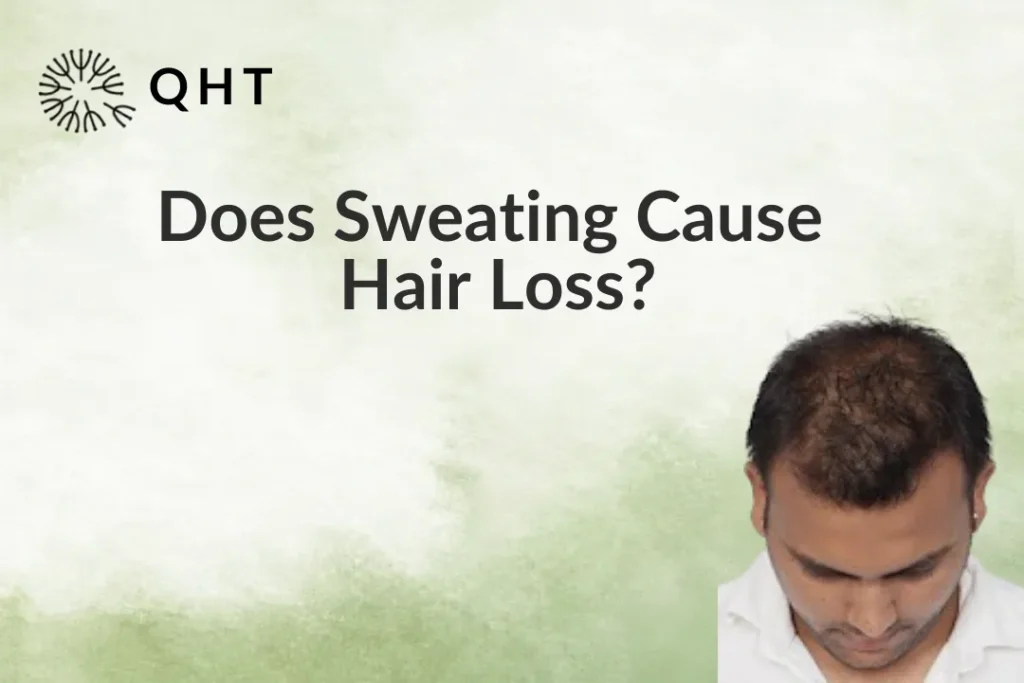
It’s been a while since you’ve worked out, or perhaps you had to step outdoors on a humid day in Gurgaon and your hair was completely drenched in sweat. A little bit down, there’s a thought that inevitably floats to mind – can sweat cause hair loss? This is something that many of us discreetly question but often are a little ashamed to speak out loud, and that’s fair, given our scalps sweat over most other parts of our body.
The reality isn’t as straight forward as a simple yes or no answer though. In fact, sweat does affect our scalp in a multitude of ways, and knowing which impacts are bad and which are actually good can save us a lot of grief.
Can Sweat Cause Hair Loss? Here’s What’s Actually Happening
Let’s just get one thing out of the way: Sweat is not the enemy. There are millions of sweat glands on your scalp and sweating is your body’s way of naturally cooling itself. Sweat is mainly water along with traces of salt, lactic acid, urea, and other small minerals – all things that on their own are not harmful to healthy hair follicles.
Sweat isn’t the issue, though; rather it is allowing your sweat to remain on your scalp for a prolonged period of time without properly cleansing it contains salt and lactic acid, which, over time, can irritate the skin and cause blockages, inflammation of the scalp and damage to the follicles, neither of which will help with hair growth. In fact, it’s a sure fire way to contribute to hair thinning if left to fester on the scalp. While sweat alone is not the reason your hair is coming out in clumps, the environment that your dirty, sweaty scalp creates makes for much better odds for hair loss.
How Sweating Can Actually Benefit Your Scalp?
This is the thing which most of you would never have imagined in your wildest dreams – moderate sweating actually is beneficial for both your scalp and hair. During a workout, sweating increase your blood circulation, thereby giving you a boosted blood flow throughout the body, and your scalp also receives this boosted blood flow. This boost of blood flow means more and more oxygen and nutrients supply goes directly into your hair follicles which in turn keeps them energized, healthy and ready to produce new hair.
Additionally, sweat also has antiseptic properties and scientists found a molecule present in sweat called dermcidin which is effective against few germs and fungi on our skin.
Having a healthy and clean scalp which is free from microbial infection has a better chance of resisting hair fall. Provided you make sure that you wash away the sweat afterwards or during a wash, you should be well on your way to having a healthier scalp. Otherwise, accumulated sweat can cause you skin to form oil plugs and this can further lead to itching and infections.
When Sweat Starts to Become a Real Problem?
There are few conditions that result in significant issues related to hair due to over the top or uncontrolled sweating on your scalp. Those who suffer with the excessive sweating in hyperhidrosis, those that regularly wear a cap, helmet for long time, or even skip hair wash for days after intense workout; all this can cause trapping of the sweat at the scalp, leading to Folliculitis, a bacterial or fungal infection of the hair follicle causing red itchy bumps at the scalp. If it is ignored over time, the recurrent inflammation can lead to the damaged follicles leading to patch and permanent hair loss.
Once again, it’s not the sweating which is to be blamed directly, but the after care which leads to this damage. One must also note that some of the hormonal imbalance conditions lead to excessive sweating and hair fall, at same time and many people will wrongly point the blame on the sweat while the root cause lies in hormones.
What You Should Do After a Sweaty Day?
The solution to this is quite easy but requires to be constant. It will help you out if you try to rinse off the scalp within a few hours of strenuous activity and excessive perspiration. Try to utilize a very mild hair shampoo free from sulphates as it helps clean the scalp and does not extract the healthy oils in it. The co-washing system can work for you; it indicates washing your hair with the help of a mild conditioner (without any hair shampoo) on alternating days to maintain cleanliness and prevent dryness.
Make it sure to not scratch the head of a profusely perspiring individual with bare uncleaned fingers, since doing this will result in bacteria entering in the skin and it may affect the inflamed pores. If you typically put on a cap or helmet while carrying out your exercise regime then it is advised to clean it out properly on similar occasions as of the cleansing of your hair.
Not just this, proper hydration of your body is vital. If your body does not acquire adequate water it becomes tough to expel heat efficiently which eventually leads to reduced circulation of blood in the tissue and poor healing of the injury to skin or injury of the body tissue.
Does the Type of Sweat Matter?
Surprisingly, yes. There are two different kinds of sweat glands located on your body. Eccrine glands (covering your whole body including scalp) create clear, watery sweat which consists mainly of water and salt.
The second type is the apocrine gland (which are found close to the base of hair follicles, for instance under your arms and in your groin area), and secrete a thicker substance which reacts with bacteria causing odour.
Since the majority of the skin on your scalp is covered with eccrine glands, scalp sweat is quite a mild and pure substance. So it’s not the composition of the sweat that causes irritation, but rather the combination of excess sweat, dehydration and the bacteria the remains of dried sweat encourages that cause it.
Final Thoughts
Therefore, is the answer that sweat leads to hair loss? Most of the time it does not. But with a repeatedly sweaty, dirty, and irritated scalp, you can indeed cultivate conditions under which hair loss takes hold and persists for an extended duration. Whether sweat is beneficial or detrimental to the health of your scalp depends on how diligently you care for your scalp once it has begun to sweat.
With the proper routines – regular washing, sufficient hydration, and refraining from extended buildup – there is no reason why sweat should make you lose your hair. Indeed, the enhanced circulation associated with regular exercise can contribute positively to the development of new hair growth. However, if you already have noticeable thinning or bald patches that do not seem to benefit from proper scalp care, your hair loss issue is probably stemming from more profound issues than merely the accumulation of sweat.
Professional evaluation of the problem is advisable. At QHT Clinic, a premier provider of hair transplant in Gurgaon, numerous clients have successfully ascertained the exact source of their hair loss and obtained treatment that effectively addresses the problem, from specialized scalp therapy to PRP therapy and hair restoration procedures. Call today to arrange a no-cost visit to QHT Clinic.