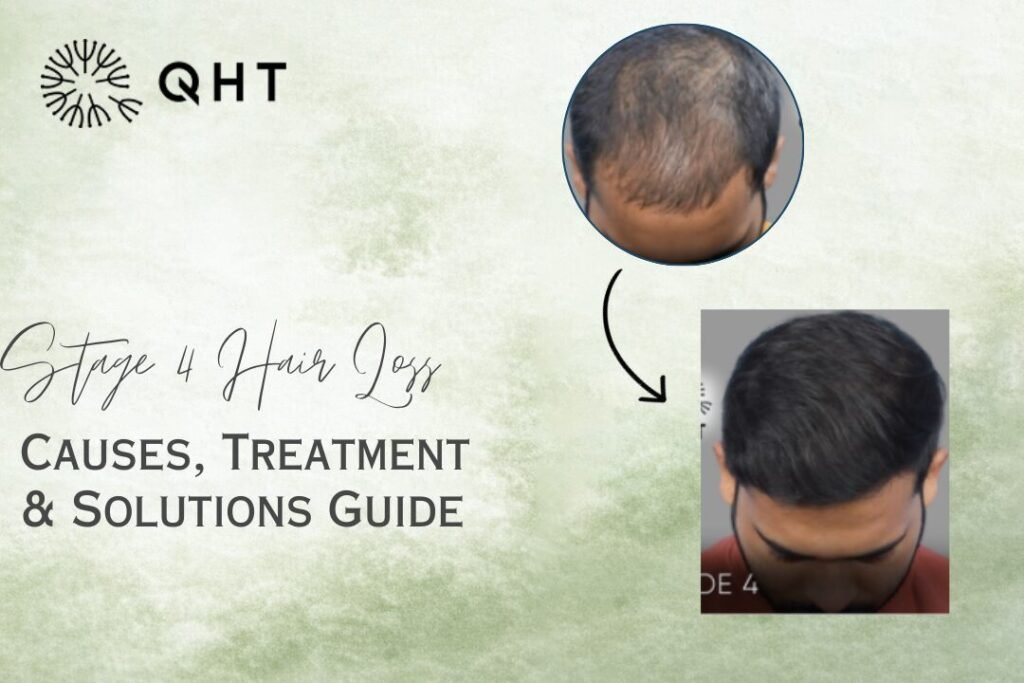
Hair loss is a common concern that affects millions of people worldwide. Among the various stages of hair loss, stage 4 hair loss represents a significant level of thinning and baldness that can impact both appearance and confidence. Understanding this stage is essential for selecting the most effective treatment options and planning a long-term hair restoration strategy.
Many individuals experiencing advanced hair loss seek professional advice from clinics like QHT Hair Transplant Clinic or other trusted hair transplant clinics in Gurgaon, which specialize in advanced hair restoration procedures.
What Is Stage 4 Hair Loss?
Stage 4 hair loss is classified using the Norwood-Hamilton scale, a widely accepted system for measuring male pattern baldness. At this stage, individuals experience:
Significant recession of the hairline, particularly at the temples
Noticeable thinning on the crown and top of the scalp
Separation between the frontal and crown bald areas is less pronounced than earlier stages
Overall reduction in hair density, making the scalp increasingly visible
This stage of hair loss is more advanced than the early signs seen in stages 1–3 and requires careful consideration when choosing a treatment plan.
Causes of Stage 4 Hair Loss
Several factors contribute to stage 4 hair loss, including:
Genetics: Male pattern baldness, often hereditary, is the primary cause.
Hormonal Changes: Dihydrotestosterone (DHT) can shrink hair follicles, leading to thinning.
Stress and Lifestyle: Poor diet, lack of sleep, and high stress can accelerate hair loss.
Medical Conditions: Certain conditions, medications, or scalp infections may contribute to advanced hair thinning.
Understanding the underlying cause helps in selecting the most effective solution for hair restoration.
Treatment Options for Stage 4 Hair Loss
At stage 4, hair loss is significant, and non-surgical options alone may not provide the desired results. However, a combination of treatments can help manage and restore hair.
1. Surgical Hair Restoration
For individuals with substantial hair loss, surgical procedures like hair transplantation are often recommended. Techniques include FUE (Follicular Unit Extraction) and FUT (Follicular Unit Transplantation), which allow the relocation of healthy hair follicles from the donor area to the thinning or bald regions.
Top centers like QHT Hair Transplant Clinic offer advanced surgical solutions, ensuring natural-looking results even in cases of stage 4 hair loss.
2. Non-Surgical Treatments
While surgery is highly effective, non-surgical treatments can complement hair restoration efforts. These include:
Medications: Topical or oral treatments can help slow further hair loss.
PRP Therapy: Platelet-rich plasma injections stimulate dormant hair follicles for improved growth.
Consulting a hair transplant clinic in Gurgaon helps determine the most suitable combination of treatments based on individual hair loss patterns and goals.
Recovery and Results After Hair Restoration
After a hair transplant or other restoration procedures, patients may notice gradual improvements over several months:
1–2 Months: Minor shedding of transplanted hair may occur, which is normal.
3–4 Months: New hair begins to grow from transplanted follicles.
6–9 Months: Noticeable hair density and improvement in the hairline.
12 Months: Full results with natural-looking thickness and coverage.
Professional clinics like QHT Hair Transplant Clinic provide detailed post-operative care instructions to maximize recovery and results.
Why Consult a Professional Clinic?
Stage 4 hair loss requires expert evaluation and treatment planning. Choosing a reputable clinic ensures:
Accurate diagnosis of hair loss stage
Personalized treatment plans for optimal results
Access to advanced surgical and non-surgical technologies
Post-procedure care to maintain healthy hair growth
Both QHT Hair Transplant Clinic and other trusted hair transplant clinics in Gurgaon have experienced specialists who can design tailored solutions for patients at this stage.
Lifestyle Tips to Support Hair Health
Alongside medical or surgical treatment, lifestyle changes can help maintain hair health and support restoration efforts:
Maintain a balanced diet rich in vitamins and minerals
Avoid excessive heat and harsh chemicals on hair
Reduce stress through exercise, meditation, or mindfulness
Use mild shampoos and avoid frequent scalp trauma
These practices complement professional treatments and help achieve longer-lasting results.
Conclusion
Stage 4 hair loss is a significant phase of hair thinning, but modern hair restoration techniques make it possible to regain a natural and full appearance. By consulting professional centers such as QHT Hair Transplant Clinic or other leading hair transplant clinics in Gurgaon, patients can explore surgical and non-surgical solutions tailored to their needs.
Early intervention, proper care, and expert guidance can help manage hair loss effectively and restore confidence. With the right approach, individuals facing stage 4 hair loss can achieve remarkable results and enjoy a natural-looking, fuller head of hair.