Recent years have seen major advancements in hair loss treatments which made Platelet-Rich Plasma therapy the most commonly used non-surgical treatment. Many individuals considering or undergoing this treatment often worry about Hair Fall After PRP. The question asks whether treatment failure exists or if treatment failure exists as part of regular healing. The article investigates post-PRP hair shedding to determine its relationship with hair transplant methods in Gurgaon and the evaluation process for selecting the best hair transplant clinic in Gurgaon.
Understanding PRP Therapy for Hair Loss
PRP therapy uses your own blood to create a treatment that promotes hair regeneration. The procedure starts with blood extraction which technicians process to create platelet-rich plasma that they will use for scalp injections.
The growth factors in platelets help to:
Activate dormant hair follicles
Enhance blood flow throughout the scalp
Fortify current hair strands
Support natural hair regrowth
Because of its natural characteristics and its non-invasive nature PRP serves as the primary treatment recommendation for patients who need hair transplant procedures in Gurgaon.
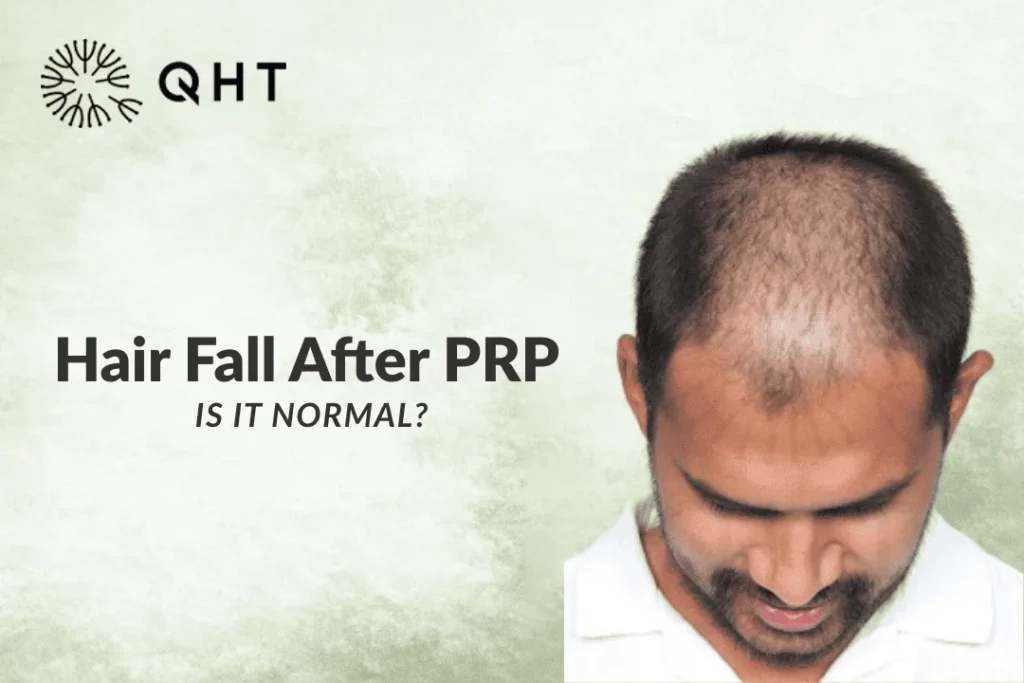
Hair Fall After PRP: Is It Normal?
People experience hair fall after PRP treatment because it happens to most individuals. The hair shedding that occurs during this period represents “shock loss” which belongs to the natural hair growth process.
What is the reason for this occurrence?
The PRP procedure leads to hair follicles entering their restorative phase.
The process begins with weak and damaged hair strands falling out. The hair follicles go through a process to establish stronger growth patterns. The body starts producing new hair that has better health.
The treatment creates an initial alarming effect which actually demonstrates treatment success through its hidden effects.
How Long Does Hair Fall Last After PRP?
The duration of hair loss following PRP treatment needs to be determined through assessment.
Post-PRP hair shedding typically:
The process starts between 2 and 4 weeks after the treatment.
The duration lasts for multiple weeks.
The process continues until new hair starts to emerge.
Visible improvement usually begins after:
The first two to three months show a decrease in hair loss while the next four to six months reveal visible hair restoration.
The process requires time because PRP functions as a slow treatment method instead of delivering quick results.
When Should You Be Concerned?
The standard pattern of hair fall after PRP treatment requires medical evaluation when the shedding becomes excessive and lasts for an extended period. You should consult your specialist if:
Hair fall continues beyond 6–8 weeks
There is no improvement after multiple sessions
You experience scalp irritation or pain
The hair density loss persists at a high rate
The best hair transplant clinic in Gurgaon provides complete treatment guidance and patient monitoring throughout the entire treatment process.
PRP vs Hair Transplant: What’s the Difference?
PRP therapy and hair transplant procedures create confusion among patients who do not understand their distinct functions. The two treatments provide effective results yet operate to accomplish different treatment goals.
PRP Therapy:
The treatment does not involve surgery
The treatment works for individuals who experience initial stages of hair loss
The method promotes natural hair development
The method requires patients to attend multiple treatment appointments
Hair Transplant:
- The procedure requires surgical intervention
- The treatment serves as an optimal solution for patients who have experienced extensive hair loss or complete baldness
- The method delivers results that last throughout a person’s life
- Clinics frequently use PRP in combination with other treatments to achieve improved patient results
Hair transplant in Gurgaon patients should use PRP treatment before and after their surgery to enhance graft survival rates and achieve greater hair density results.
Tips to Manage Hair Fall After PRP
The following tips help people handle their hair loss problem which occurs after PRP treatment.
1. Follow Post-Treatment Instructions
Your doctor will provide you with instructions about how to take care of your scalp and how to wash your hair and what medications to take. Assist them through strict compliance.
2. Avoid Harsh Chemicals
Do not use any hair products which contain chemical parts because they will cause your scalp to become irritated.
3. Keep a Healthy Diet
People should use nutrients which help their hair stay healthy.
The body needs protein from eggs and lentils. The body needs iron from spinach and dates. The body requires biotin from nuts and seeds.
4. Stay Consistent with Sessions
The best PRP results occur when patients complete all required treatment sessions. The treatment process will experience interruptions when patients miss their scheduled treatment sessions.
5. Control Stress
Stress acts as a significant factor which leads to hair loss in individuals. People need to practice yoga and meditation together with light exercise as their daily routine.
Conclusion
Experiencing Hair Fall After PRP is usually a temporary and natural phase of the hair growth cycle. The shedding process results in more robust and healthier hair regrowth when people use proper treatment methods together with their medical professional’s advice and their own efforts. The best results with permanent hair restoration require you to consult a trusted specialist who will help you follow the recommended treatment sessions. Your confidence will return when your hair undergoes permanent improvement.