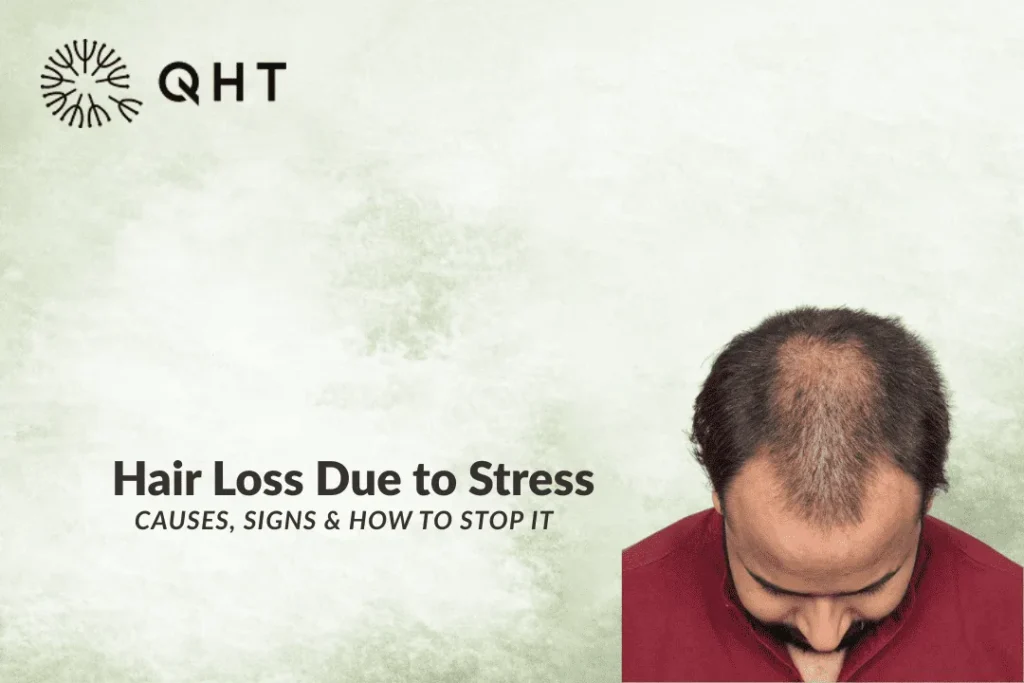
Life today is fast and demanding. Stress is something we all deal with. But its impact goes beyond health. It can directly affect your hair. Many people notice hair fall. They don’t realize that stress hair loss could be the reason. If you’re seeing hair on your pillow or in the shower it’s essential to understand whether stress is the root cause.
In this blog we’ll break down how stress affects your hair. We will look at what signs to watch for and how to stop it before it becomes serious.
What is Stress Hair Loss?
Stress hair loss is a condition. Emotional or physical stress disrupts the hair growth cycle. This leads to shedding.
Common triggers include:
- Work pressure
- Trauma
- Illness or surgery
- Lack of sleep
This type of hair loss is often temporary and reversible. Unlike hair loss.
How Stress Affects Your Hair
Your hair grows in cycles. Stress can disturb this balance.
1. Telogen Effluvium ( Common)
This is the cause of stress hair loss.
What happens:
- Hair shifts into the resting phase
- Large amounts of hair fall out together
2. Alopecia Areata
Stress can trigger a reaction.
Result:
Sudden bald patches
3. Trichotillomania
A psychological condition. Stress leads to hair pulling.
Signs You Are Experiencing Stress Hair Loss
- Sudden increase in hair fall
- Hair coming out in clumps
- Thinning across the scalp
- Reduced hair volume
- Patchy hair loss (in some cases)
How Much Hair Fall is Much?
Normal hair fall:
50 – 100 strands per day
Stress-related hair fall:
150 – 300 strands per day
If you notice this consistently it’s time to take action.
When Does Stress Hair Loss Start?
One confusing aspect of stress hair loss is the delay.
Timeline:
- Stress occurs today
- Hair fall starts after 2 – 3 months
This makes it harder to identify the cause.
Is Stress Hair Loss Permanent?
The news:
It is usually temporary
Once stress levels reduce hair growth can return to normal.
How Long Does It Take to Recover?
Recovery depends on your lifestyle and stress levels.
General timeline:
- Hair fall reduces in 3 – 4 months
- Regrowth starts in 4 – 6 months
- Full recovery may take up to a year
Main Causes of Stress Hair Loss
1. Emotional Stress
- Anxiety
- Relationship issues
- Work pressure
2. Physical Stress
- Illness
- Surgery
- Sudden weight loss
3. Lifestyle Imbalance
- Diet
- Lack of sleep
- Overworking
How to Stop Stress Hair Loss
1. Control Stress
This is the important step.
Try:
- Meditation
- Yoga
- Deep breathing
2. Improve Your Diet
Hair needs nutrients to grow.
Include:
- Protein
- Iron
- Vitamins
3. Sleep Properly
Lack of sleep worsens stress and hair fall.
4. Stay Hydrated
Water supports body functions.
5. Gentle Hair Care
- Avoid heat styling
- Use products
- Do not over-wash
Medical Treatments for Stress Hair Loss
If hair fall continues medical help may be needed.
PRP Therapy:
Stimulates hair. Improves growth.
Medications:
Doctors may prescribe treatments based on condition.
Hair Transplant
If hair loss becomes permanent procedures like the Best Transplant in gurgaon offer long-term solutions.
Role of Latest Hair Transplant Technology
Techniques like the latest hair transplant technology and new hair transplant technology provide:
- Natural results
- Healing
- High success rate
When Should You See a Doctor?
You should consult a specialist if:
- Hair fall is severe
- No improvement after 6 months
- You notice patches
Common Myths About Stress Hair Loss
Myth 1: Stress causes permanent baldness
Reality: It is usually temporary.
Myth 2: Hair will grow back instantly
Reality: Recovery takes time.
Myth 3: Only mental stress matters
Reality: Physical stress also affects hair.
Tips for Faster Hair Recovery
- Reduce stress levels
- Maintain a diet
- Follow a consistent routine
- Avoid harsh hair treatments
Why Early Action Matters
Ignoring hair loss can worsen the condition.
Early care helps:
- Prevent shedding
- Support faster regrowth
- Maintain hair density
Final Thoughts
Stress hair loss is your body’s response to imbalance. It’s not about hair. It’s a signal that your body needs care.
Conclusion:
Hair loss due to stress may feel overwhelming. It is usually temporary and manageable. By understanding the causes and taking the steps you can control hair fall and support regrowth. Focus on reducing stress. Improve your lifestyle. Maintain proper hair care. If the condition becomes severe consulting experts and exploring options like the Best Transplant in gurgaon can help restore your hair and confidence. Healthy hair starts with a mind. Take care of both for long-lasting results.