Facial hair is really important for how a man looks and feels about himself.. Some men start to lose hair in their beard area and this can be really upsetting. This problem is called Alopecia Barbae, which’s a kind of hair loss that happens because the body’s immune system is not working right. It is also known as beard alopecia and it can cause one or more round bald spots on the face and neck.
It may be a cosmetic concern but it can still make a person feel bad. If we know what is the cause of Alopecia Barbae, how can we diagnose it and what options of treatment we have in the case of alopecia beard, then we will be able to take the adequate measures to control and possibly restore facial hair growth.
What Is Alopecia Barbae
Alopecia Barbae is a unique form of alopecia areata that is isolated to the beard. This is when the hair follicles are attacked by the immune system, leading to hair loss in circular patterns.
Alopecia Barbae can happen to men of any age it can start all of a sudden without any warning. Sometimes the hair grows back on its own. Sometimes hair loss keeps happening over and over again.
Common Symptoms of Beard Alopecia
The signs of alopecia are usually pretty easy to see. Some common symptoms of alopecia include:
- Round or oval bald spots in the beard area
- Skin that is smooth where the hair has fallen out
- Hair loss that happens all of a sudden, over a period of time
- Multiple bald spots that can join together to make an area
- Sometimes there is itching or a tingling feeling before the hair loss starts
- The beard does not grow evenly which is a symptom of alopecia
Causes of Alopecia Areata Beard
The exact cause of the alopecia areata beard is still not clear. Researchers think that it happens when genetic autoimmune and environmental factors come together.
1. Autoimmune Response
The main reason is that the body’s immune system wrongly attacks the hair follicles. This stops hair growth.
2. Genetic Factors
People with a family history of alopecia areata or other autoimmune diseases may be more likely to get Alopecia Barbae.
3. Stress
Sometimes stress can make beard hair loss worse in people who’re already prone to it.
4. Other Autoimmune Conditions
Having conditions like thyroid problems, vitiligo or type 1 diabetes, can make it more likely to develop alopecia.
5. Environmental Triggers
Some infections, illnesses or lifestyle factors may contribute to the start of the condition.
Can a Hair Transplant Help with Alopecia Barbae?
For people who have had long-standing beard hair loss a beard hair transplant might be an option. A specialist needs to check if the condition’s not active and if a transplant is suitable.
If beard hair follicles are permanently damaged or hair loss has been stable for a long time a hair transplant in Gurgaon might provide a long-term cosmetic solution.
Modern transplant techniques can:
- Restore a looking beard
- Fill in areas
- Improve symmetry
- Give permanent results if done correctly
How Is Alopecia Barbae Diagnosed
To figure out what is going on with your hair loss you need to see a doctor because it can look like a fungus or some other skin problem.
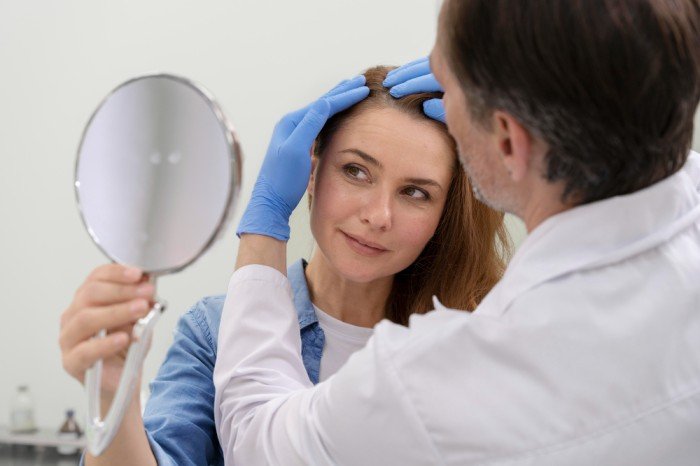
A dermatologist is the person who usually diagnoses Alopecia Barbae by doing things.
Physical Examination
The doctor looks at the area where the hair is falling out to see if there are any bald spots.
Medical History Review
The doctor asks questions about your family if you have any diseases where your body attacks itself and if you have been stressed lately. This helps the doctor figure out what might be causing the hair loss.
Dermoscopy
The doctor uses an tools to examine the hair follicles very closely to look for signs of Alopecia Barbae.
Blood Tests
The doctor might take some blood to check if you have any thyroid problems or other diseases where your body attacks itself.
Skin Biopsy
Sometimes the doctor might take a piece of skin to make sure you really have Alopecia Barbae and not something else.
Conclusion
Alopecia Barbae is an autoimmune reaction in which your body attacks your own hair follicles leading to hair loss in patches on the beard area. It leads to patches and makes your facial hair grow unevenly. This can be very distressing. There are things that can help, like special medicines, PRP therapy and other medical things. If your hair loss is stable you might be able to get a hair transplant in Gurgaon to make your beard look better. You should see a doctor as soon as possible so you can get the right treatment and get the best results for your Alopecia Barbae.